
General information about the rules in force. Not legal advice. Last updated 1 October 2026.
Family reunification for adopted children in Denmark depends on one question first: how and where the adoption was made. The route below that fits the adoption decides which rules the authority applies.
- Family reunification for adopted children in Denmark starts with the type of adoption, not the child's age or nationality.
- Five routes cover most cases: Danish adoption, recognised foreign adoption, stepchild adoption, adoption by a foreign resident, and unrecognised adoption.
- Udlændingestyrelsen decides first instance. Udlændingenævnet hears appeals in family reunification cases.
- Documents proving the adoption are the most common weak point, so collect them early.
This guide is for internationals who live in Denmark, or plan to, and want to bring an adopted child. It explains how the routes differ in general terms. Globe Advokater works with these cases in Danish and English.
Why the type of adoption matters
Denmark does not treat every adoption the same way in 2026. A child adopted through a Danish process is in a different position from a child adopted in another country under foreign law. A child adopted by a stepparent is different again.
The authority asks two things. Is the adoption valid and recognised in Denmark? And does the adoption create a real legal parent-child relationship? The answer to both comes from documents, not from statements.
The rules are in the Aliens Act (udlændingeloven) and its executive orders. Family reunification is called familiesammenføring in Danish. You will see that word on letters from the authority.
What to look at when comparing the routes
Five points separate the routes. They are listed here before the table so you can read the table against them.
- Where the adoption was made - in Denmark or in another country.
- Whether Denmark recognises the adoption - a foreign decision does not always carry over automatically.
- Who the adopting parent is - a Danish citizen, a foreign national with residence in Denmark, or a spouse of one of them.
- Which documents exist - the adoption decision, birth records and proof of the child's situation before and after adoption.
- Which authority handles the file - Udlændingestyrelsen in first instance, Udlændingenævnet on appeal.
The routes at a glance
| Route | Relevant when | Main document issue | Main limitation |
|---|---|---|---|
| 1. Adoption made in Denmark | The adoption went through the Danish adoption system | Danish adoption decision | Applies only to adoptions made under Danish procedure |
| 2. Recognised foreign adoption | The adoption was made abroad and is recognised in Denmark | Foreign decision, often with legalisation and translation | Recognition must be established first |
| 3. Stepchild adoption | A spouse adopted the partner's child | Adoption decision and proof of the family link | Depends on the adoption being valid and on the parent's status in Denmark |
| 4. Adoption by a foreign resident | The adopting parent is a foreign national with residence in Denmark | Proof of the parent's residence basis | The parent's own permit affects the file |
| 5. Adoption not recognised | The adoption has no legal effect in Denmark | Evidence of the actual family situation | Other routes may apply instead of this one |
Route 1: Adoption made in Denmark
This route is relevant when the adoption was carried out under Danish procedure. The adoption decision is a Danish document, so recognition is not a separate question.
Adoption made in Denmark pros:
- The decision comes from a Danish authority, so the authority knows the document.
- Recognition does not need to be examined.
- The legal link between parent and child is clear from the file.
Adoption made in Denmark cons:
- The child may already be in Denmark, which makes this a different situation from a reunification application.
- The adopting parent's own status still counts.
Relevant for: families where the adoption was completed through Danish channels.
Route 2: Recognised foreign adoption
Many international families fall here. The child was adopted in the parent's home country or in a third country, and the family now wants the child to live in Denmark.
The authority looks at whether the foreign adoption is valid where it was made and whether Denmark gives it legal effect. Only then does it assess the reunification application itself.
Recognised foreign adoption pros:
- A full legal adoption gives the child a clear legal link to the parent.
- The foreign decision can be used as the main proof.
Recognised foreign adoption cons:
- Foreign documents usually need legalisation and certified translation.
- Recognition is a step of its own and adds work to the file.
- Practice differs between countries of origin.
Relevant for: parents who adopted abroad and want the child to join them in Denmark.
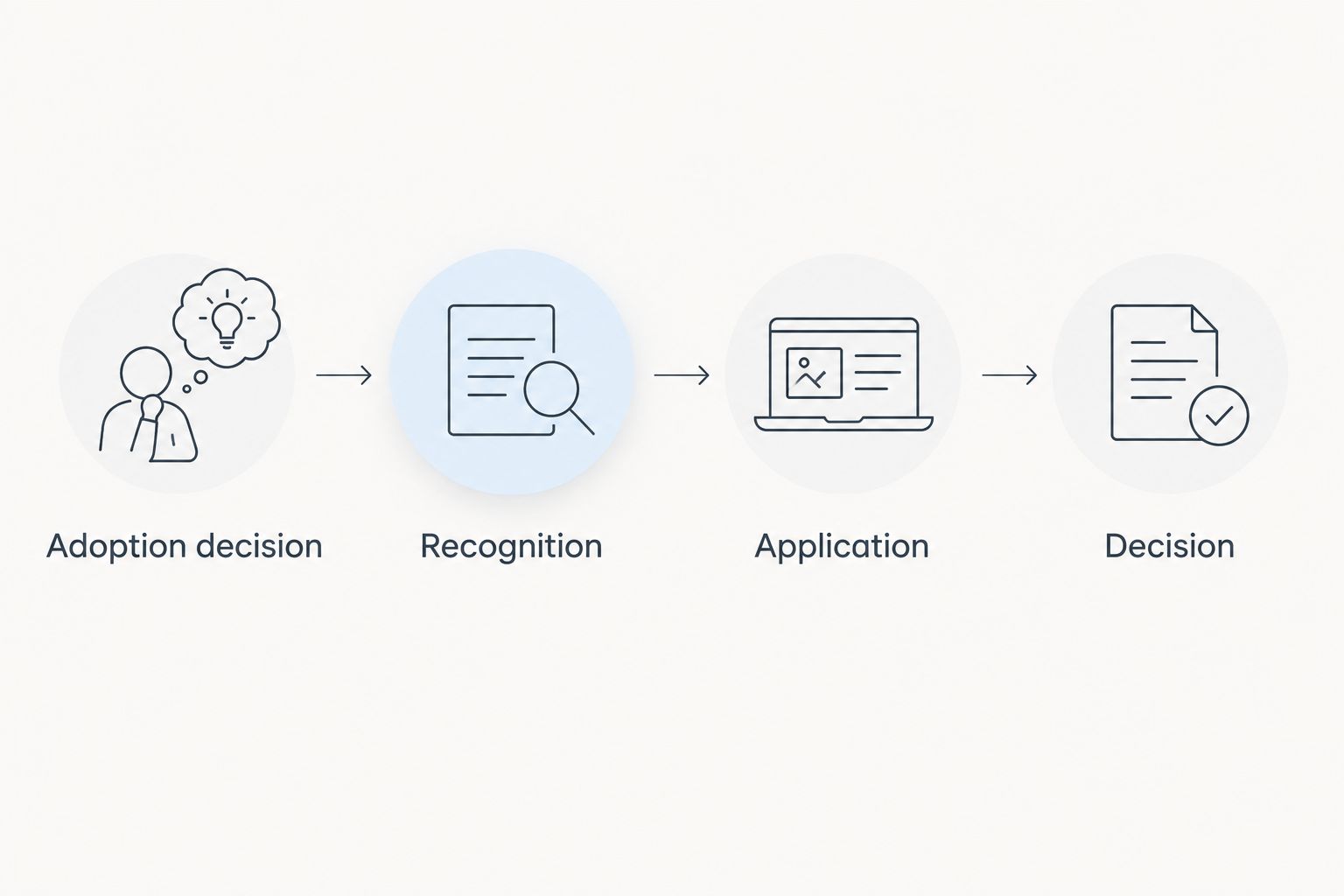
Route 3: Stepchild adoption
A stepchild adoption happens when one spouse adopts the other spouse's child. The child then has a legal link to both adults.
This route often sits close to other family reunification routes. If the adoption is valid, the child is treated as the adopting parent's child. If it is not, the file may need to be built on a different basis.
For how family reunification routes compare in general, see how family reunification routes compare by approval difficulty.
Stepchild adoption pros:
- The family link is documented by a court or authority decision.
- The child belongs to the household in legal terms, not only in practice.
Stepchild adoption cons:
- The adoption itself must be valid and recognised.
- The other biological parent's position can complicate the documents.
Relevant for: couples where one partner has already adopted the other's child.
Route 4: Adoption by a foreign resident
Not every adopting parent is a Danish citizen. Many readers of this guide are foreign nationals with a residence permit in Denmark. The child's application is tied to the parent's own basis for staying.
That means two files are in play in practice: the child's application and the parent's residence status. A weakness in the parent's permit can reach the child's case.
Parents of Danish children face a related question. See residence permits for parents of Danish children.
Adoption by a foreign resident pros:
- A parent who already lives in Denmark can document the home and the ties here.
Adoption by a foreign resident cons:
- The parent's permit type shapes what the authority looks at.
- Changes in the parent's own status during the case matter.
Relevant for: foreign nationals with a Danish residence permit who have adopted a child.
Route 5: Adoption not recognised in Denmark
Some adoptions have no legal effect in Denmark. This can happen when the adoption was informal, when it follows local custom without a formal decision, or when the decision does not meet Danish requirements.
In that case the child is not treated as an adopted child for reunification. The family may have to look at other grounds, or at a new adoption procedure. Which option exists depends on the facts.
Adoption not recognised pros:
- Other routes may still exist, because the child's real situation still counts.
Adoption not recognised cons:
- The adoption route itself is closed until recognition is resolved.
- The evidence burden is often higher.
- Processing can take a different path from a standard application.
Relevant for: families whose adoption has no formal decision or is not accepted in Denmark.
Documents the authority usually looks for
Documents carry most of these cases. The exact list depends on the route, but the categories are similar.
- The adoption decision, in original form.
- The child's birth record before and after the adoption.
- Proof of the adopting parent's identity and residence in Denmark.
- Certified translations into Danish or English where the original is in another language.
- Evidence that the child lives with, or will live with, the adopting parent.
Foreign documents often need legalisation. The requirement differs by country. A missing stamp can delay a file even when the facts are clear.
Which authority decides
Udlændingestyrelsen decides family reunification applications in first instance. If the answer is a refusal, the appeal goes to Udlændingenævnet. Asylum cases follow a different path through Flygtningenævnet, so they should not be mixed with family reunification.
Deadlines apply in this type of case. Contact a lawyer to find out which deadlines apply in your case.
If you have a refusal letter, read it for the authority's reasons. The reasons show whether the problem is the adoption, the documents or the parent's status.
Related routes for other family situations
Not every child in a family is adopted, and not every family is married. Two other guides cover nearby situations: family reunification for unmarried partners and dual citizenship for non-EU nationals, which matters when a child's nationality changes after adoption.
How the routes compare in short
The routes are not a ranking. They are a decision tree that starts with the adoption.
- A Danish adoption decision is the simplest document position.
- A recognised foreign adoption needs proof of recognition on top of the decision.
- A stepchild adoption depends on the validity of the adoption and on the family link.
- Adoption by a foreign resident ties the child's case to the parent's own permit.
- An unrecognised adoption closes the adoption route until the problem is solved.
The authority considers each file on its own facts. A general guide cannot say which route fits a given family.
FAQ
Can an adopted child get family reunification in Denmark?
Yes, adoption can be the basis for family reunification. The authority first checks that the adoption is valid and recognised in Denmark, then assesses the application.
Is a foreign adoption valid in Denmark?
Not automatically. Denmark looks at whether the adoption is valid where it was made and whether it can have legal effect here.
Which authority handles the application?
Udlændingestyrelsen decides in first instance. Appeals in family reunification cases go to Udlændingenævnet.
Does a stepchild adoption count as an adoption for reunification?
A valid and recognised stepchild adoption gives the child a legal link to the adopting parent. That link is what the authority examines.
What documents are needed for an adopted child?
Usually the adoption decision, birth records, proof of the parent's residence and certified translations. The exact list depends on the route.
What if the adoption is not recognised in Denmark?
The adoption route is then not available as it stands. Other grounds or a new adoption procedure may be considered, depending on the facts.
Does the parent's residence permit affect the child's case?
Yes. When the adopting parent is a foreign national, the parent's own basis for staying in Denmark is part of what the authority examines.
One last thing
Most problems in these files start before the application, in the adoption paperwork. A document that is complete in the country of origin can still fall short of what Denmark needs, for example on legalisation or translation. Checking the documents first is usually quicker than correcting them after a refusal.
If you want to talk through your documents, book a meeting with us.
Related guides
- Family reunification routes compared by approval difficulty
- Residence permits for parents of Danish children
- Family reunification for unmarried partners
This article is general information about the rules and practice in force. It is not legal advice, it does not assess your specific case, and reading it does not create a client relationship.
Rules, deadlines and the practice of the authorities change. We accept no liability for errors or for changes after the update date. Always check the information with the relevant authority or contact a lawyer before you act.
If you have a specific case, you are welcome to contact Globe Advokater for an assessment.
Last updated 1 October 2026.