
General information about the rules in force. Not legal advice. Last updated 6 October 2026.
A university lecturer from outside the EU needs a residence and work permit before starting work in Denmark, and the route depends on the role, the employer and the pay. If you are looking for a work permit Denmark university lecturer route in 2026, the main options are the researcher route, Beløbsordningen (the pay limit scheme), Positivlisten (the positive list) and Fast-track. Citizens of the EU and EEA follow different rules.
- Non-EU lecturers need a residence and work permit, applied for through SIRI and nyidanmark.dk.
- The route depends on the post: researcher route, Beløbsordningen, Positivlisten or Fast-track.
- EU and EEA citizens do not need a work permit, but follow EU residence rules.
- Refusals in work permit cases are appealed to Udlændingenævnet, not Flygtningenævnet.
- Globe Advokater explains these routes in general terms; individual questions go to a consultation.
Why this matters for academic staff in 2026
Academic posts look simple on paper. A university offers a contract, and the lecturer moves. In practice, the permit is tied to the exact post, the employer and the terms of the contract.
Three features make academic staff different from other workers:
- Universities are often approved research institutions, which can open a separate researcher route.
- Many posts are fixed-term, so the contract type affects which scheme fits.
- Lecturers often bring a spouse or children, so the family side of the move needs to be planned at the same time.
The rules described here are general. They explain how the process works so you know what to ask. They are not advice on an individual case.
How to understand the work permit process for lecturers
The steps below follow the order in which the questions usually arise. Each step lists what the authority looks at.
Check your nationality and status first
The first question is whether a work permit is needed at all.
- Citizens of EU and EEA countries have a right to work in Denmark under EU rules and register their stay instead of applying for a work permit.
- Citizens of the other Nordic countries also have a separate right to live and work in Denmark.
- Citizens of other countries need a residence and work permit before they start work.
- A visa for a short visit does not give a right to work.
- Some people already hold a permit based on family ties or study. The permit conditions then decide whether work is allowed.
Identify the route that fits the post
There is no single permit called a lecturer permit. SIRI, the Danish Agency for International Recruitment and Integration, assesses the application under the scheme that matches the post.
- The researcher route applies where the person is employed to carry out research at an approved research institution.
- Beløbsordningen - the pay limit scheme - applies where the annual pay reaches the threshold set by the authorities. The threshold changes from year to year, so the current figure is taken from nyidanmark.dk.
- Positivlisten - the positive list - covers occupations with a shortage of qualified workers. Whether a teaching or academic post appears on the list is checked on the official list.
- Fast-track applies where the employer is certified by SIRI for the scheme.
- Where several routes could apply, the choice affects the documents asked for.
For a closer look at one of these schemes, see our guide to Positivlisten professions and fast-track work permits.
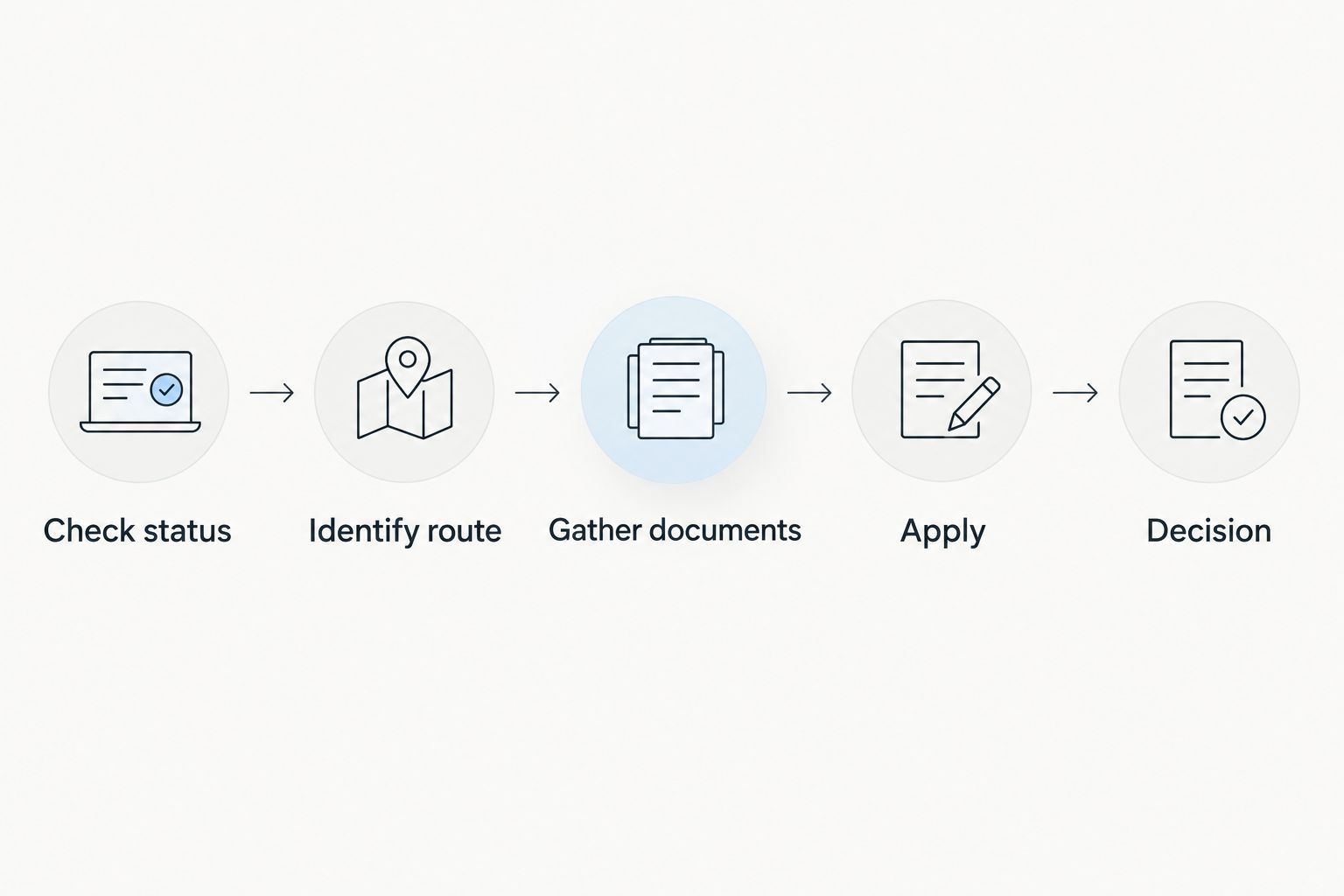
Gather the employment documents
The authority wants to see that the post is real and that the terms are in order. The exact list is on nyidanmark.dk for the scheme in question.
- A signed employment contract or offer that names the post, the employer and the pay.
- Documents showing the person's education and qualifications.
- A valid passport.
- Where the researcher route applies, documents from the research institution that confirm the research role.
- Documents are often needed in Danish or English. Other languages usually need a translation.
Submit the application
Applications go through the online system at nyidanmark.dk. SIRI handles work permit applications under the schemes above.
- The applicant, and in some cases the employer, completes parts of the form.
- A fee is charged by the authorities. The current fee is on nyidanmark.dk.
- The applicant gives biometrics at a service point after the application is made.
- The authority may ask for more documents after the application is filed.
- Deadlines apply in this type of case. Contact a lawyer to find out which deadlines apply in your case.
Plan for family members
A lecturer who moves with a spouse, partner or children usually needs a second process for them.
- Family members often apply for their own permits, linked to the lecturer's permit.
- The type of permit held by the lecturer affects what the family can apply for.
- Marriage and partnership documents must be in order and, where needed, legalised.
- Children in school age have their own considerations.
Our guide to residence permits for parents of Danish children covers a related situation for families.
Understand what a refusal means
A refusal is not always the end of the case. The decision letter states the reasons and the way to appeal.
- An appeal of a work permit decision goes to Udlændingenævnet - the Immigration Appeals Board.
- Asylum appeals go to Flygtningenævnet, which is a different body and is not relevant for a work permit.
- A complaint must give reasons and attach any new documents.
- Filing within the first days after the decision can matter where a departure deadline has been set. The decision letter shows the dates that apply.
- Deadlines apply in this type of case. Contact a lawyer to find out which deadlines apply in your case.
Keep the permit valid after arrival
A permit is granted for a specific post. Changes can affect it.
- A change of employer or role may need a new assessment.
- Changes in pay or working hours can matter, especially under Beløbsordningen.
- An extension is a new application and follows the rules in force at the time.
- Permanent residence has its own conditions, which are set out on the firm's permanentopholdstilladelse page.
Which options exist for academic staff
The table compares the main routes in general terms. Fit for an individual case depends on the facts.
| Option | Best for | Key limitation |
|---|---|---|
| Researcher route | Staff employed to carry out research at an approved institution | Tied to the research role and the institution |
| Beløbsordningen | Posts where pay reaches the current threshold | The threshold changes and the pay must be documented |
| Positivlisten | Occupations on the official shortage list | The occupation must be on the list when the application is assessed |
| Fast-track | Posts with a certified employer | Only available if the employer holds the certification |
| EU or EEA right of residence | Citizens of EU and EEA countries | Registration rules still apply, and no work permit is issued |
Globe Advokater is a Copenhagen law firm that works in Danish and English with foreign nationals on work and residence permits.
Common mistakes academic staff make
- Assuming the university handles everything. The university may support the application, but the permit is a decision about the individual.
- Starting work before the permit is in place. Work without permission can affect later applications.
- Choosing a route from a forum post instead of the official scheme page, which can be out of date.
- Forgetting the family. Spouse and children usually need their own process.
- Treating a change of post as a formality. A new role or new pay can mean a new assessment.
Other academic and teaching roles have their own routes. See our guide to work permits for teachers in Denmark.
Questions about your permit?
Book a meeting to talk through your situation with a lawyer.
FAQ
Do university lecturers need a work permit in Denmark?
Citizens of countries outside the EU and EEA need a residence and work permit. EU and EEA citizens have a right to work under EU rules and register their stay instead.
Is there a special work permit for researchers in Denmark?
Yes, a researcher route exists for people employed to carry out research at an approved research institution. Other academic posts may fall under Beløbsordningen or Positivlisten.
Which authority handles work permit applications?
SIRI assesses work permit applications under the schemes for skilled workers. Applications are filed through nyidanmark.dk.
Can a lecturer bring a spouse and children to Denmark?
Family members can often apply for their own permits linked to the lecturer's permit. The type of permit held by the lecturer affects what is possible.
Where is a refusal of a work permit appealed?
Work permit refusals are appealed to Udlændingenævnet. Asylum appeals go to Flygtningenævnet, which is a separate body.
Does the work permit apply to any employer?
No. A permit is granted for a specific post, so a change of employer or role can need a new assessment.
One last thing
The pay threshold under Beløbsordningen is updated on a regular basis, and the figure on nyidanmark.dk is the one that counts in 2026. A figure found in an older article or on a university page can be out of date.
Related guides
This article is general information about the rules and practice in force. It is not legal advice, it does not assess your specific case, and reading it does not create a client relationship.
Rules, deadlines and the practice of the authorities change. We accept no liability for errors or for changes after the update date. Always check the information with the relevant authority or contact a lawyer before you act.
If you have a specific case, you are welcome to contact Globe Advokater for an assessment.
Last updated 6 October 2026.